Wabi-sabi is a Japanese way of seeing beauty in things that are natural, imperfect and a little worn: a handmade bowl that isn’t quite round, a plaster wall that shows the trowel, wood that darkens with age. In an interior, wabi-sabi design means fewer, better objects, rough natural materials, a muted palette and soft light. It’s calm without being cold, which is why so many people want it at home and in hotels.
It’s also easy to get wrong. A room with beige furniture and a dried branch in a vase isn’t wabi-sabi. Here’s what makes it work.
Materials that show their texture
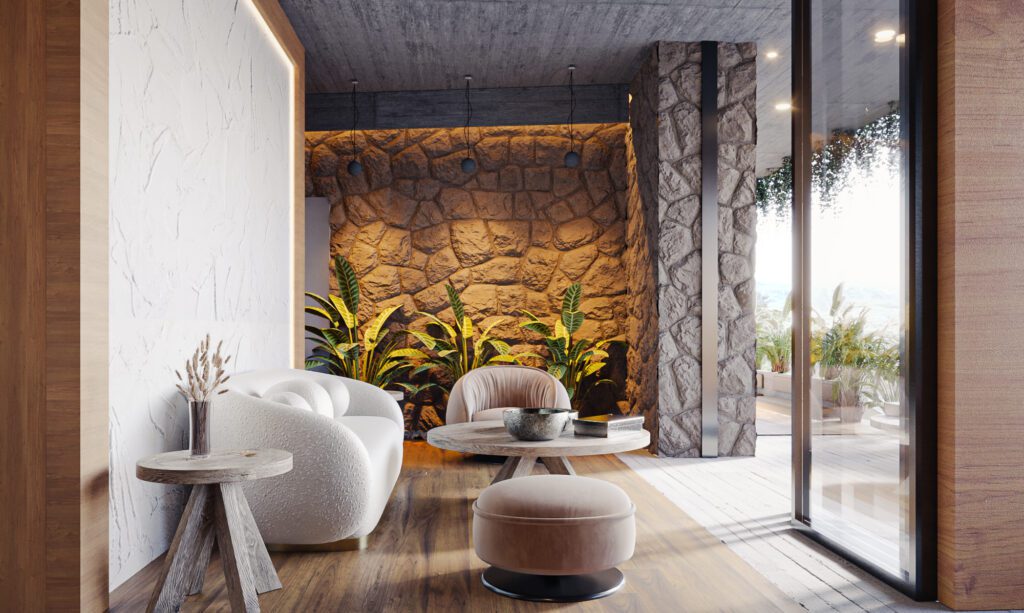
- Stone. Rough or split-face stone, not polished slabs. It looks best when light grazes across it.
- Plaster. Lime plaster, clay or microcement, with visible movement in the finish.
- Wood. Wide planks, open grain and oiled or matte finishes that will age gracefully.
- Textiles. Linen, wool and boucle, in natural tones and slightly rumpled on purpose.
In a render, texture depends on light, so I place the lights where they’ll catch the surface. A stone wall lit from below at night looks completely different from the same wall in flat daylight.
A palette taken from nature
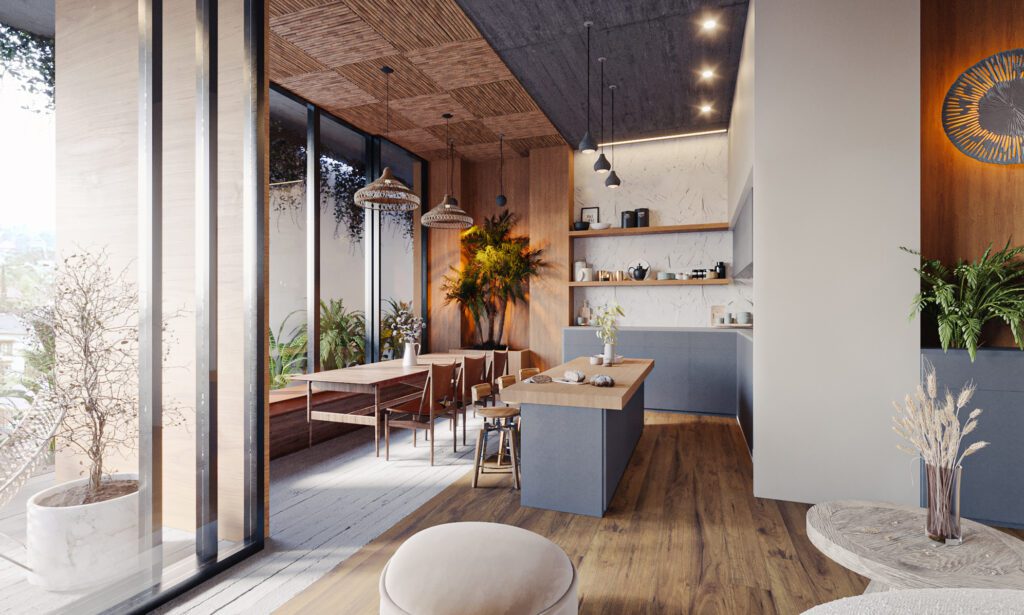
Wabi-sabi colors come from the materials themselves: stone grays, warm clay, oatmeal, charcoal, the brown of oiled wood. Strong color is rare and small, usually from a plant or a single ceramic piece. The trick is contrast in texture rather than in color, so the room doesn’t turn flat.
Soft light and real darkness
Wabi-sabi rooms are rarely bright from corner to corner. Warm, low light, a pendant over the table, a floor lamp, a strip of hidden light, leaves some corners in shadow, and that shadow is part of the calm. Large windows matter too: daylight moving across rough surfaces is the whole point.
Where wabi-sabi meets bohemian
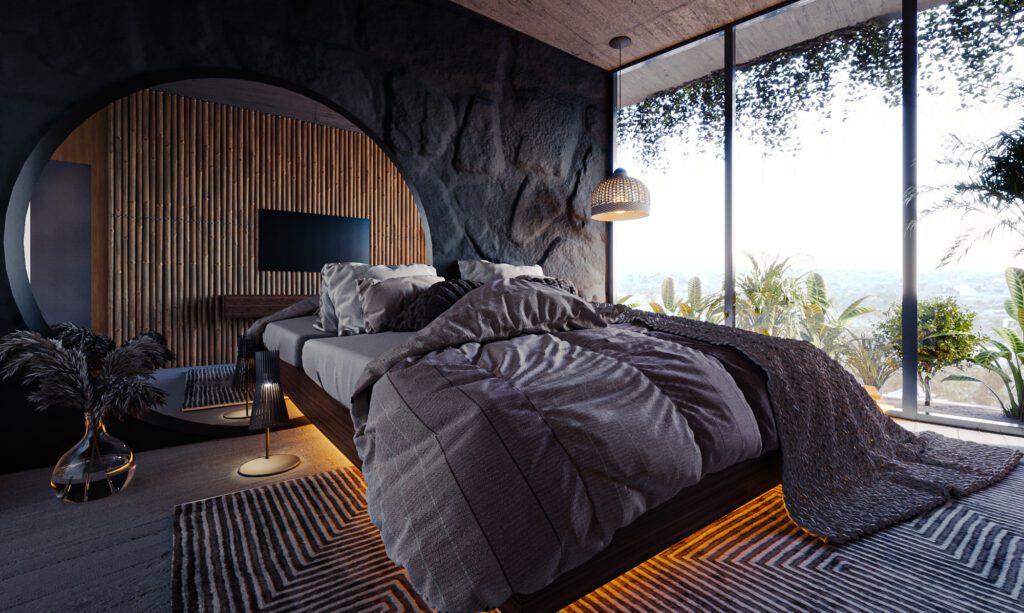
A warmer, more decorated cousin of wabi-sabi mixes the same natural materials with more objects: string lights, floor cushions, plants and handmade pieces. It keeps the textured walls and the muted palette but feels more lived-in. The two styles share a rule: everything in the room should look like it was chosen, not bought as a set.

How to start at home
- Remove first. Wabi-sabi starts with fewer things. Clear the surfaces before buying anything new.
- One textured wall. Plaster or stone on one wall changes a room more than any furniture.
- Swap shiny for matte. Matte paint, oiled wood and unglazed ceramics instead of gloss.
- Warm the light. Use 2700K bulbs and add a lamp or two at low height.
If you’re planning a full room, a 3D rendering lets you check the balance of texture and light before you commit to plaster or stone. My post on color, lighting and texture explains why texture changes how color reads.
Questions about wabi-sabi interiors
Is wabi-sabi the same as Japandi?
They’re related. Japandi mixes Japanese and Scandinavian minimalism and is usually cleaner and lighter. Wabi-sabi leans more toward rough, aged and handmade materials.
Does wabi-sabi work in a small apartment?
Yes, often better than in a big house, because it relies on fewer objects and calm surfaces.
How much does an interior design project cost?
My interior design fee is $1.10 to $1.90 per square foot, depending on the level of the project. Renders on their own are usually $250 to $350 each, and every estimate is free.
Want a calmer, more natural room? Tell me about your space for a free estimate, and see the wabi-sabi hotel room project for the full set of images.